In today’s fast-paced business environment, organizations need structured processes, higher efficiency, and consistent quality to stay competitive. CMMI certification acts as a globally recognized benchmark that validates an organization’s ability to deliver high-quality products and services while optimizing processes. Achieving this certification is not only about compliance but also about building credibility, gaining customer trust, and creating a sustainable roadmap for growth.
Businesses of all sizes—from startups to large enterprises—benefit from CMMI certification by streamlining operations, reducing risks, and enhancing performance. In this article, we will explore what is CMMI certification, the CMMI certification process, its levels, cost, challenges, and practical strategies on how to get CMMI certification successfully. By the end, you will have a clear understanding of how CMMI certification can transform your organization and give you a competitive edge globally.
What is CMMI Certification?
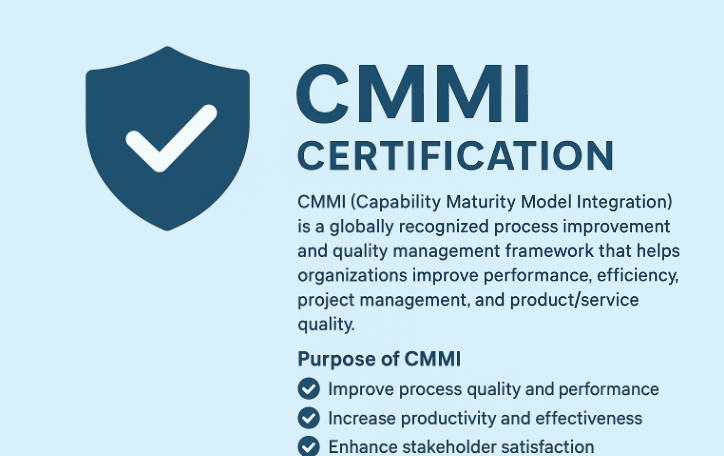
CMMI Certification, or Capability Maturity Model Integration Certification, is an internationally recognized framework that evaluates an organization’s process maturity and ability to deliver high-quality results. Originally developed by the Software Engineering Institute (SEI), CMMI certification provides organizations with a structured approach to process improvement across various domains including software development, systems engineering, service management, and supplier management.
The certification focuses on two aspects:
- Capability Levels – Assessing the effectiveness of individual processes.
- Maturity Levels – Evaluating the overall process maturity of the organization.
Organizations pursue CMMI certification for multiple reasons:
- To standardize processes and ensure consistent performance.
- To reduce risks in project management and service delivery.
- To gain credibility with clients and stakeholders.
- To establish a culture of continuous improvement and process excellence.
Achieving CMMI certification demonstrates that a business is committed to maintaining high standards, improving efficiency, and delivering quality outcomes reliably.
Why CMMI Certification Matters for Businesses
Obtaining CMMI certification can transform the way organizations operate. The benefits are significant and can be categorized as follows:
- Improved Quality and Consistency: Standardized processes ensure every product or service meets the organization’s quality benchmarks.
- Enhanced Efficiency and Reduced Costs: Optimizing processes minimizes redundancies, reduces errors, and saves resources.
- Risk Management and Predictability: With defined processes, organizations can identify potential risks early and mitigate them effectively.
- Competitive Advantage: Many international tenders, government contracts, and large enterprises prefer partnering with CMMI-certified organizations.
- Increased Customer Trust: Certification signals to clients and partners that your business adheres to internationally recognized process standards.
- Cultural Transformation: Employees adopt a structured approach to problem-solving, process adherence, and continuous improvement.
For example, an IT company that implemented CMMI Level 3 processes reported a 30% reduction in project delays and significant improvement in client satisfaction. This demonstrates how CMMI certification directly impacts operational efficiency and business growth.
Understanding the CMMI Certification Levels
CMMI certification is divided into five maturity levels, each reflecting a different degree of process maturity and organizational capability:
- Level 1 – Initial: Processes are unpredictable and reactive. The organization often relies on individual effort rather than structured processes.
- Level 2 – Managed: Basic project management processes are established. Processes are planned and tracked, resulting in more predictable project outcomes.
- Level 3 – Defined: Organization-wide standard processes are documented, standardized, and integrated across projects.
- Level 4 – Quantitatively Managed: Processes are measured and controlled using data-driven metrics, allowing better decision-making and reduced defects.
- Level 5 – Optimizing: Focus on continuous process improvement through innovative practices, predictive analysis, and lessons learned from past performance.
Reaching higher levels of CMMI certification enables businesses to not only streamline operations but also to innovate while maintaining consistency and efficiency.
The CMMI Certification Process
The CMMI certification process is designed to ensure organizations achieve measurable process maturity and operational excellence. The steps include:
- Step 1: Gap Analysis – Identify gaps between current processes and CMMI standards.
- Step 2: Training and Awareness – Educate employees on processes, roles, and responsibilities.
- Step 3: Process Implementation and Documentation – Standardize all processes and maintain comprehensive documentation.
- Step 4: Internal Audits and Assessments – Conduct evaluations to identify areas that need improvement before formal appraisal.
- Step 5: Formal Appraisal by Certified Lead Appraiser – External experts evaluate processes against CMMI standards.
- Step 6: Continuous Improvement – Regularly refine processes to maintain and improve maturity levels.
Following this structured CMMI certification process ensures organizations are fully prepared for appraisal and can achieve certification efficiently.
How Much Does CMMI Certification Cost?
The cost of CMMI certification varies depending on multiple factors:
- Organization Size and Complexity – Larger organizations require more resources and longer preparation.
- Current Process Maturity – The lower the existing maturity, the more effort is needed to meet standards.
- Training and Consultancy – Hiring experts and providing employee training adds to the cost.
- Appraisal Fees and Certification Body Charges – Fees vary depending on the appraisal body and maturity level targeted.
Approximate Cost Estimates:
- Small to Medium Enterprises: ₹5–15 lakhs in India.
- Large Enterprises: ₹20–50+ lakhs.
- Global Average: $10,000–$50,000 depending on scope and complexity.
Investing in CMMI certification should be seen as a strategic move to improve process efficiency, client trust, and competitive advantage rather than a one-time expense.
Challenges in Getting CMMI Certified
While CMMI certification offers significant benefits, organizations may face challenges such as:
- Resource Allocation – Time, budget, and skilled personnel must be dedicated to the implementation process.
- Change Management Resistance – Employees may resist new procedures or process changes.
- Maintaining Momentum – Achieving higher maturity levels can take months, requiring consistent focus and leadership.
- Complex Framework – Small and medium enterprises may find the framework detailed and challenging to implement without expert guidance.
Solution: Partnering with an experienced consulting firm ensures proper guidance, minimizes challenges, and accelerates certification.
How to Get CMMI Certification Successfully
Achieving CMMI certification requires a systematic approach:
- Partner with Experienced Consultants – Experts help with gap analysis, training, and appraisal preparation.
- Plan and Implement Processes Gradually – Prioritize critical processes first to ensure compliance.
- Conduct Regular Internal Audits – Evaluate processes before formal appraisal to identify areas of improvement.
- Leverage Technology – Use software tools for documentation, tracking, and process automation.
- Foster a Culture of Continuous Improvement – Encourage employees to adopt process-oriented thinking.
A mid-sized IT company working with SR3 successfully achieved CMMI Level 3 certification within 12 months by following these best practices.
CMMI Certification vs. ISO Certification
Organizations often ask how CMMI certification differs from ISO certification:
- Focus: CMMI emphasizes process maturity and continuous improvement, while ISO focuses on quality management standards.
- Certification Levels: CMMI has five maturity levels, whereas ISO provides a single standard per certification (e.g., ISO 9001).
- Industry Recognition: CMMI is widely recognized in software, services, and supplier management, while ISO is recognized globally across industries.
- Combined Benefits: Many organizations pursue both to strengthen credibility and operational excellence.
SR3 provides integrated CMMI + ISO + compliance solutions to help organizations achieve holistic process improvement and certification success.
Conclusion
CMMI certification is more than a credential—it is a strategic investment in operational excellence, process maturity, and global competitiveness. Organizations that follow the CMMI certification process benefit from improved quality, reduced risks, and greater efficiency. Early adoption and commitment to continuous improvement allow companies to reach higher maturity levels, innovate effectively, and gain the trust of clients worldwide.
Ready to achieve CMMI certification and elevate your business? SR3 offers end-to-end support in CMMI appraisals, ISO certifications, and compliance solutions. From gap analysis to achieving Level 5 certification, our expert consultants ensure your organization attains process excellence and global recognition.
Contact SR3 today to begin your CMMI certification journey and gain a competitive edge in the global market.
Frequently Asked Questions
What is CMMI Certification?
CMMI Certification is a globally recognized framework that assesses an organization’s process maturity and ability to deliver quality products and services consistently.
Why is CMMI certification important?
It ensures standardized processes, reduces operational risks, improves efficiency, and enhances credibility with clients and partners.
How do I get CMMI certification?
Begin with a gap analysis, implement standardized processes, train employees, conduct internal audits, and undergo a formal appraisal by a certified lead appraiser.
What is the CMMI certification process?
The process includes gap analysis, training, process implementation, internal audits, formal appraisal, and continuous improvement.
How much does CMMI certification cost?
Costs vary by organization size, complexity, and maturity level. SMEs in India typically spend ₹5–15 lakhs, while large enterprises may spend ₹20–50+ lakhs.
How long does it take to get CMMI certified?
The timeline depends on organizational maturity and readiness but generally ranges from 6 to 18 months.
Can small businesses benefit from CMMI certification?
Yes, SMEs can improve operational efficiency, client trust, and readiness for large projects or tenders.
Is CMMI certification valid globally?
Yes, it is internationally recognized and widely respected across industries including IT, software, services, and engineering.