
In the digital era, safeguarding sensitive information is no longer optional—it’s a business imperative. Understanding ISO 27001 requirements is crucial for organizations that want to protect data, ensure regulatory compliance, and build trust with clients and partners. The first step toward effective information security is grasping these requirements and implementing a robust Information Security Management System (ISMS). Within the first few lines, readers should know that meeting these requirements directly leads to better security and prepares the organization for ISO certification.
ISO 27001 is the globally recognized standard for information security management. By following the ISO 27001 requirements, organizations can systematically identify risks, implement effective controls, and establish a culture of security. Meeting ISO 27001 certification requirements ensures that your business complies with international standards, enhances customer confidence, and gains a competitive advantage. This guide will explain every key requirement, clause, control, and step necessary to achieve certification successfully.
What is ISO 27001?
ISO 27001 is an international standard designed to help organizations manage information security systematically. It specifies the requirements for an ISMS, which is a framework for protecting sensitive information, mitigating risks, and ensuring confidentiality, integrity, and availability of data.
Organizations implement ISO 27001 requirements to:
- Reduce risks associated with data breaches and cyberattacks.
- Align security measures with business objectives.
- Ensure compliance with global regulations such as GDPR, HIPAA, and others.
- Demonstrate credibility and build trust with customers and partners.
- Establish a culture of continuous improvement in information security practices.
The standard is applicable to organizations of all sizes and industries. By understanding and implementing ISO 27001 requirements, businesses can proactively manage threats, implement controls, and continuously improve their ISMS to adapt to evolving security challenges.
ISO 27001 Requirements Explained
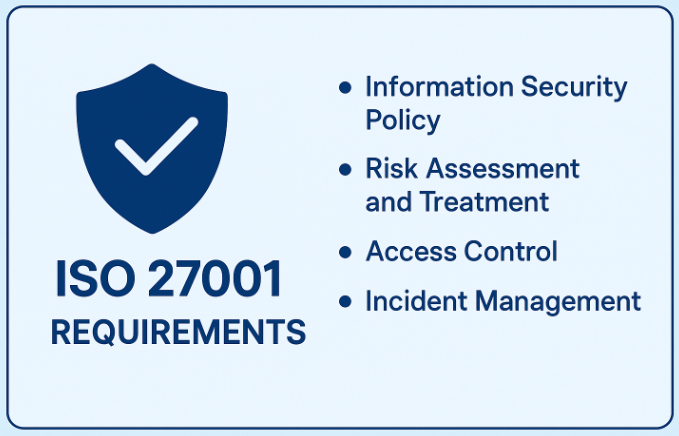
Understanding the ISO 27001 requirements is critical for achieving certification and maintaining robust information security. The standard is divided into clauses and Annex A controls, which together provide a comprehensive framework for managing and protecting information.
ISO 27001 Clauses
The main clauses of ISO 27001 that form the backbone of the requirements include:
- Clause 4: Context of the Organization – Organizations must identify internal and external factors affecting their ISMS and understand the needs and expectations of interested parties.
- Clause 5: Leadership – Top management must demonstrate commitment to information security, establish a clear policy, and assign responsibilities.
- Clause 6: Planning – Organizations need to identify risks and opportunities, set information security objectives, and plan how to achieve them.
- Clause 7: Support – This includes providing resources, training employees, communicating security policies, and maintaining proper documentation.
- Clause 8: Operation – Implementing the controls and processes required to address risks and operate the ISMS effectively.
- Clause 9: Performance Evaluation – Monitoring, measuring, analyzing, and evaluating ISMS performance to ensure it meets objectives.
- Clause 10: Improvement – Identifying nonconformities, taking corrective actions, and continually improving the ISMS.
Following these ISO 27001 requirements ensures that organizations have a structured and systematic approach to protecting information assets.
Annex A Controls Overview
Annex A of ISO 27001 lists 114 controls organized into 14 categories, each designed to strengthen security and ensure comprehensive risk management. Key control categories include:
- Information security policies
- Organization of information security
- Human resource security
- Asset management
- Access control
- Cryptography
- Physical and environmental security
- Operations security
- Communications security
- System acquisition, development, and maintenance
- Supplier relationships
- Information security incident management
- Information security aspects of business continuity
- Compliance
Implementing these controls is a fundamental part of meeting ISO 27001 requirements, ensuring your organization is prepared for certification and audit processes.
ISO 27001 Certification Requirements
Meeting ISO 27001 certification requirements involves more than understanding the clauses—it requires careful planning, documentation, and structured audits. Certification demonstrates that an organization complies with international information security standards.
Key Certification Steps
- Eligibility – Any organization that handles sensitive information or wants to improve information security can pursue ISO 27001 certification.
- Documentation – Organizations must create and maintain comprehensive documentation of their ISMS, including policies, procedures, risk assessments, and evidence of controls.
- Certification Audit:
- Stage 1 (Documentation Review) – Auditors review the organization’s ISMS documentation to ensure compliance with ISO 27001 requirements.
- Stage 2 (Implementation Audit) – Auditors verify that the ISMS is effectively implemented and that controls are operating as intended.
- Stage 1 (Documentation Review) – Auditors review the organization’s ISMS documentation to ensure compliance with ISO 27001 requirements.
- Surveillance Audits – Periodic audits to ensure ongoing compliance.
- Recertification – Conducted every three years to maintain certification and demonstrate continual improvement.
Achieving ISO 27001 certification requirements not only validates your commitment to information security but also provides a framework for ongoing protection and risk management.
Benefits of Meeting ISO 27001 Requirements
Organizations that meet ISO 27001 requirements enjoy numerous advantages:
- Enhanced Security Posture – Protect sensitive data against cyber threats and breaches.
- Regulatory Compliance – Align with international regulations such as GDPR and HIPAA.
- Business Reputation – Build trust with clients, partners, and stakeholders.
- Operational Efficiency – Streamlined processes reduce risk and improve productivity.
- Competitive Advantage – Certification demonstrates commitment to security and differentiates the organization in the market.
Common Challenges in Achieving Certification
While meeting ISO 27001 requirements provides significant benefits, organizations often face challenges such as:
- Misunderstanding the requirements due to complex clauses and controls.
- Lack of internal expertise in information security management.
- Resource constraints, including time, budget, and manpower.
- Inadequate documentation or gaps in evidence.
- Resistance to change from employees and departments.
Identifying these challenges early allows organizations to plan effectively and achieve certification more efficiently.
How to Prepare for ISO 27001 Certification
Proper preparation is critical to successfully meeting ISO 27001 requirements:
- Conduct a Gap Analysis – Compare existing security practices against ISO 27001 standards.
- Develop a Roadmap – Prioritize actions, assign responsibilities, and set timelines for implementation.
- Employee Awareness and Training – Educate staff on policies, procedures, and security responsibilities.
- Leverage Expert Consultants – Experienced partners can simplify implementation, provide guidance on documentation, and help navigate audits.
By following these steps, organizations can implement ISO 27001 requirements efficiently and confidently pursue certification.
Why Partner with Experts for ISO 27001 Certification
Partnering with professional consultants helps organizations:
- Save Time and Resources – Avoid common pitfalls and accelerate the certification process.
- Ensure Compliance – Experts guide you through documentation, audits, and risk assessments.
- Access Templates and Tools – Use proven frameworks and training materials.
- Minimize Risks – Reduce chances of audit failures and ensure proper implementation of ISO 27001 requirements.
SR3 – Your Trusted ISO 27001 Certification Partner
SR3 provides end-to-end support for organizations seeking ISO 27001 certification requirements:
- Consulting Services – Gap analysis, risk assessment, and ISMS planning.
- Training – Equip teams with knowledge to maintain compliance.
- Implementation Support – Deploy controls in alignment with Annex A and ISO 27001 clauses.
- Audit Assistance – Prepare organizations for Stage 1 and Stage 2 certification audits.
With SR3, organizations can confidently achieve certification while improving information security and risk management practices.
Conclusion
Understanding and implementing ISO 27001 requirements is essential for protecting sensitive information, achieving regulatory compliance, and building trust with clients and partners. Meeting ISO 27001 certification requirements not only validates your commitment to information security but also provides a competitive edge and operational efficiency.
Partnering with experts like SR3 ensures a smooth, structured, and successful certification journey. Contact SR3 today to simplify your ISO 27001 certification process and strengthen your organization’s information security.
Frequently Asked Questions
What are the main ISO 27001 requirements?
They include establishing an ISMS, identifying risks, implementing controls from Annex A, monitoring performance, and continually improving the system.
Who should pursue ISO 27001 certification?
Any organization handling sensitive data, regardless of size or industry, can benefit from certification.
How long does ISO 27001 certification take?
Typically 6–12 months, depending on organizational complexity, resources, and current security practices.
What is Annex A in ISO 27001?
Annex A contains 114 security controls across 14 categories designed to protect information assets and mitigate risks.
Can small businesses achieve ISO 27001 certification?
Yes, ISO 27001 is scalable and suitable for organizations of all sizes, allowing tailored implementation of ISO 27001 requirements.
What is the difference between ISO 27001 requirements and ISO 27001 certification requirements?
Requirements define the framework for information security, while certification requirements focus on audits, documentation, and eligibility for formal certification.
Do I need external help to meet ISO 27001 requirements?
While not mandatory, partnering with experts like SR3 ensures faster, compliant, and more efficient implementation.
How often do ISO 27001 audits occur?
Surveillance audits are conducted annually, and full recertification occurs every three years to verify continual compliance.