
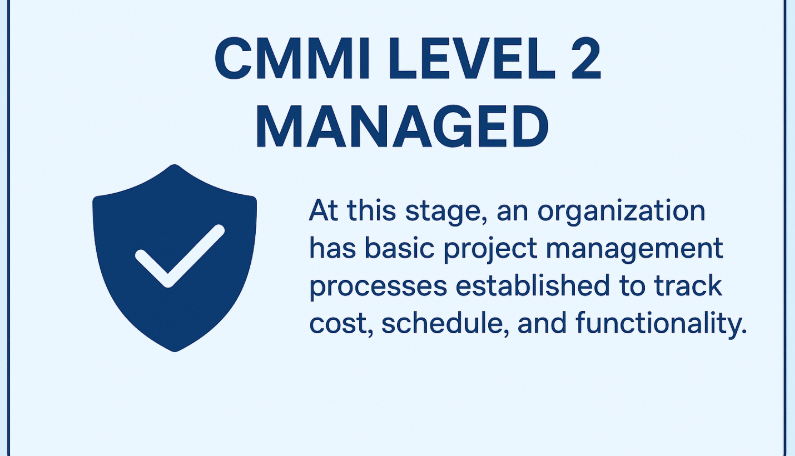
In CMMI the Level 2 stage is described as the Managed Stage, where projects move beyond chaos and start following structured, measurable, and repeatable processes. At this point, organizations learn how to plan projects properly, allocate resources wisely, and track outcomes consistently.
Unlike Level 1, which is reactive and heavily dependent on individuals, CMMI Level 2 introduces stability and predictability. When an organization reaches this level, customers can trust that projects will be delivered within time and budget. This stage sets the baseline for future growth and ensures that management discipline becomes part of everyday practice.
Simply put, in CMMI the Level 2 stage is described as the turning point where businesses stop relying on luck and start building sustainable, reliable project management practices.
What is CMMI?
The Capability Maturity Model Integration (CMMI) is a globally recognized process improvement framework. It was first developed by the Software Engineering Institute (SEI) and is now managed by ISACA. Organizations across IT, aerospace, defense, manufacturing, healthcare, and even government use CMMI to create structured, repeatable processes that ensure quality and efficiency.
Why do organizations adopt CMMI?
- To reduce risks and avoid project failures.
- To increase efficiency by eliminating wasted time and effort.
- To improve compliance with global quality standards.
- To gain customer trust through reliable delivery.
- To establish continuous improvement as a culture.
CMMI is structured into five maturity levels. Each level represents a stage of process maturity. At Level 1, work is chaotic. In CMMI the Level 2 stage is described as the first step toward structured, managed, and predictable outcomes.
What is CMMI Level 2?
CMMI Level 2 Stage Explained
In CMMI the Level 2 stage is described as the Managed Stage. This means processes are no longer random or dependent only on individuals. Instead, projects are:
- Planned in advance.
- Tracked regularly.
- Measured for performance.
- Controlled through discipline.
At this stage, the focus is not yet organization-wide but primarily at the project level. Each project follows clear requirements, has its own documented plan, and is monitored against set goals.
This makes CMMI Level 2 maturity an important shift. It ensures every project uses structured practices and establishes a culture of accountability. It is the bridge between chaos at Level 1 and organizational consistency at Level 3.
In summary, CMMI Level 2 is described as the stage where organizations gain control over their projects, paving the way for predictable results and customer satisfaction.
Characteristics of CMMI Maturity Level 2
The features that define CMMI maturity Level 2 include:
- Requirements Management – Clearly defined, agreed upon, and tracked requirements for every project.
- Project Planning – Formal planning with timelines, budgets, and resource allocation.
- Project Monitoring and Control – Regular tracking against objectives to detect risks early.
- Supplier Agreement Management – Managing contracts and commitments with vendors.
- Measurement and Accountability – Ensuring responsibilities are assigned and monitored.
- Process Discipline – Work is no longer random; teams follow standard project-level procedures.
This is why experts often emphasize that in CMMI the Level 2 stage is described as the managed step—because it moves organizations from guesswork to guided, measurable management practices.
Benefits of Achieving CMMI Level 2
Reaching CMMI Level 2 offers significant advantages:
- Predictability: Organizations can forecast timelines and budgets more accurately.
- Consistency: Similar projects follow similar processes, leading to repeatable success.
- Customer Trust: Clients are more confident in businesses that follow structured methods.
- Reduced Risk: Issues are detected early due to proper tracking.
- Foundation for Growth: Provides the discipline needed to progress to CMMI Level 3 and beyond.
These benefits highlight why CMMI Level 2 stage is described as the foundation of maturity. Without this level, advancing further is almost impossible.
Common Challenges in Reaching CMMI Level 2
While many businesses aim for CMMI Level 2, common obstacles include:
- Lack of documentation culture: Teams may resist creating written processes.
- Resistance to process adoption: Employees may prefer ad-hoc ways of working.
- Skill gaps: Managers and staff often lack proper training.
- Leadership challenges: Leaders may underestimate the importance of process discipline.
- Need for external guidance: Many organizations require consulting support to adopt best practices.
This is why in CMMI the Level 2 stage is described as both challenging and rewarding—it requires effort to establish, but once achieved, it brings long-term stability.
Comparison Between CMMI Level 2 and Level 3
The differences between CMMI Level 2 and CMMI Level 3 are clear:
- At Level 2:
- Processes are managed at the project level.
- Documentation exists but may vary from project to project.
- Each project manager has flexibility in applying processes.
- Focus is on discipline within individual projects.
- Processes are managed at the project level.
- At Level 3:
- Processes are standardized across the entire organization.
- A common set of practices applies to all teams.
- Knowledge sharing becomes organization-wide.
- Continuous improvement is driven collectively.
- Processes are standardized across the entire organization.
This is why CMMI Level 2 is described as the stepping stone. Without mastering managed projects at Level 2, organizations cannot successfully reach organizational consistency at Level 3.
How to Achieve CMMI Level 2 Successfully
To reach CMMI Level 2 maturity, organizations should follow these steps:
- Conduct a Gap Analysis: Identify where current practices differ from CMMI requirements.
- Develop Training Programs: Ensure employees and project managers understand the new processes.
- Create Documentation Standards: Establish templates and guidelines for project planning and monitoring.
- Introduce Process Discipline: Make sure every project follows structured methods.
- Perform Regular Audits: Review projects to ensure compliance with processes.
- Engage Expert Consultants: Work with professionals like SR3 to shorten the journey.
By following these steps, businesses can successfully meet the expectations of CMMI Level 2 stage is described as the Managed Stage.
Why Choose SR3 for CMMI Consulting?
At SR3, we understand that in CMMI the Level 2 stage is described as the foundation for business transformation. Our consultants bring years of expertise in CMMI, ISO standards, GDPR compliance, and process optimization.
SR3 offers:
- Consulting: Tailored strategies for your organization’s needs.
- Training: Empowering teams with the right skills.
- Implementation: Step-by-step guidance to adopt CMMI processes.
- Appraisals: Helping you prepare for formal certification.
With SR3, organizations move confidently from chaos to control, achieving CMMI Level 2 maturity and preparing for even greater process excellence.
Conclusion
In conclusion, in CMMI the Level 2 stage is described as the Managed Stage, where organizations gain control, accountability, and predictability in project management. It marks the transition from ad-hoc operations to structured, measurable practices that customers trust.
If your business is ready to take the next step, SR3 can help you achieve CMMI Level 2 certification with expert consulting, training, and appraisal support.
Take action today—partner with SR3 to transform your processes and unlock new opportunities for growth.
Frequently Asked Questions
What is CMMI Level 2?
In CMMI the Level 2 stage is described as the Managed Stage, where projects are planned, tracked, and controlled using structured methods.
Why is CMMI Level 2 important?
Because it introduces predictability and discipline, ensuring that projects meet deadlines and budgets consistently.
What is the difference between CMMI Level 2 and Level 3?
Level 2 focuses on individual project management, while Level 3 standardizes processes across the entire organization.
How long does it take to achieve CMMI Level 2?
Most organizations achieve certification within 6–12 months, depending on readiness and resources.
Which industries benefit from CMMI Level 2?
Industries such as IT, aerospace, defense, healthcare, and manufacturing benefit greatly from CMMI adoption.
Can small businesses achieve CMMI Level 2?
Yes, with proper training and consulting, even small organizations can reach Level 2 maturity.
What challenges do companies face when adopting Level 2?
Common challenges include lack of documentation, resistance to new processes, and training gaps.
Who can help achieve CMMI Level 2 certification?
Professional consultants like SR3 provide guidance, training, and implementation support to make the journey smoother.